About
Chittagong Development Research Center (CDRC)
Dr. Rajib Chakraborty
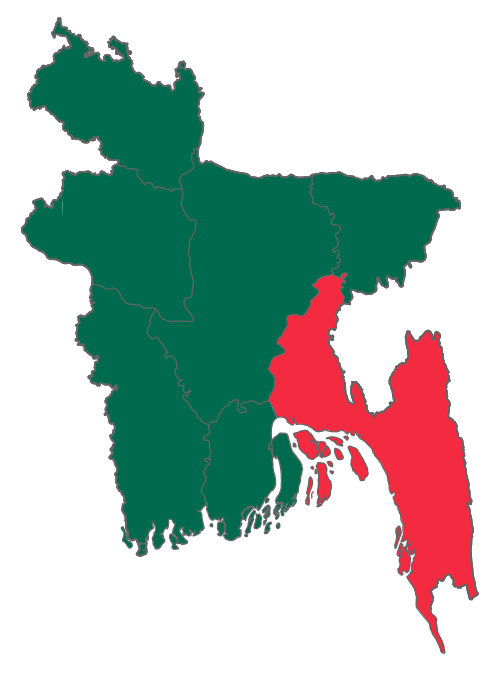
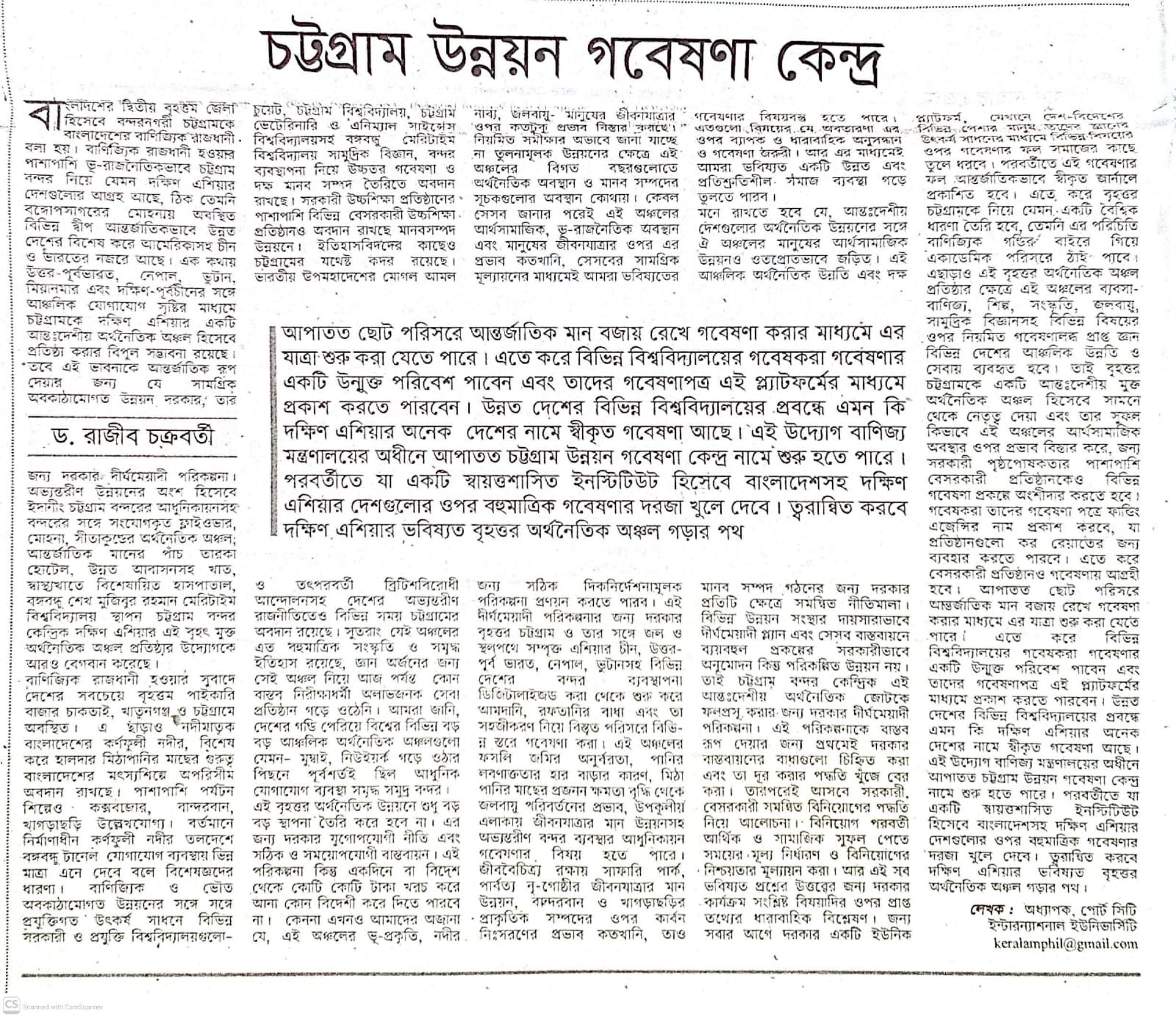
Chattogram, the second-largest city of Bangladesh, is known as the commercial capital of the country. In addition to its commercial importance, the Chattogram port holds significant geopolitical importance, attracting the attention of countries across South and Southeast Asia.
Its strategic location near the Bay of Bengal and proximity to regions such as Northeast India, Nepal, Bhutan, Myanmar, and Southern China creates immense potential to develop Chattogram into a regional economic zone through improved connectivity.
However, to transform this vision into an international reality, comprehensive infrastructure development and long-term planning are essential. As part of internal development, recent initiatives such as modernization of the Chattogram port, construction of flyovers connected to the port, development of economic zones in Sitakunda, international-standard five-star hotels, improved housing, specialized hospitals, and the establishment of Maritime University have accelerated efforts to create a large free economic zone centered around Chattogram.
Being the commercial capital, Chattogram hosts the country’s largest wholesale markets, including Chaktai and Khatunganj. Additionally, the Karnaphuli River—especially the freshwater fish of the Halda River—plays a crucial role in Bangladesh’s fisheries sector. The tourism sector is also notable, with Cox’s Bazar, Bandarban, and Khagrachari as key attractions. Despite the criticism of excessive making and daily operating costs, experts believe that the under-construction Bangabandhu Tunnel beneath the Karnaphuli River will bring a new dimension to the transportation system.
Alongside commercial and physical infrastructure development, technological advancement is being driven by public and technical universities such as Chittagong University of Engineering & Technology (CUET), University of Chittagong, Chittagong Veterinary and Animal Sciences University, and Bangabandhu Maritime University. These institutions contribute to higher research in marine science and port management while developing skilled human resources. Private higher education institutions also play a role in human resource development.
Chattogram is equally valued by historians. From the Mughal era to anti-British movements and various phases of national politics, the region has made significant contributions. Despite its rich history and multidimensional culture, no practical, research-based, non-profit institution has yet been established to systematically study the region.
History opines that globally recognized economic regions like Mumbai and New York developed largely due to modern seaports and advanced communication systems. However, economic development cannot rely solely on large infrastructure projects; it also requires timely policies and effective implementation. Such development cannot be achieved overnight or solely through foreign investment, as many aspects of the region—such as geography, river navigability, climate, and their impact on livelihoods—remain insufficiently studied.
Due to the lack of regular surveys, it is unclear how the region has progressed in terms of economic indicators and human resource development over the years. Only through proper data collection and comprehensive evaluation can assess the socio-economic and geopolitical impact of development in this region and identify future research areas.
To address these issues, continuous and extensive research is essential. This will help build a progressive and promising society. It is important to remember that regional economic development is closely linked to the socio-economic well-being of the people.
Initially, through Chittagong Development Research Centre (CDRC) platform, dialogue, discussion as well as research activities on developmental issues can be initiated on a small scale. This would create an open platform for researchers, individuals to publish their work. Many developed countries have internationally recognized research platforms, and even several South Asian countries have established similar initiatives.
To do these, long-term planning would require research on port digitalization, trade facilitation, and removal of import-export barriers involving countries connected by land and water routes, including China, Northeast India, Nepal, and Bhutan. Other research areas could include soil fertility, increasing salinity, freshwater fish breeding, climate change impacts, coastal living standards, and modernization of internal port systems.
Further topics include biodiversity conservation, safari parks, improving the livelihoods of indigenous communities and assessing carbon emission impacts on the natural resources of Bandarban and Khagrachari. Developing human resources in all sectors will require coordinated policy frameworks.
It is noted that unplanned, costly projects approved without proper long-term strategy do not constitute sustainable development. Therefore, a well-structured, long-term plan is essential to make this transnational economic alliance successful. The first step is to identify and eliminate implementation barriers, followed by discussions on coordinated public-private investment strategies and evaluation of financial and social returns.
To answer future questions, continuous analysis of relevant data is crucial. For this, a unique platform is needed where professionals from home and abroad can contribute research and share knowledge with society. Eventually, these research outputs should be published in internationally recognized journals, enhancing Chattogram’s global academic presence beyond its commercial identity.
Moreover, research findings on trade, industry, culture, climate, and marine science will contribute to regional development across countries. To lead Chattogram as a transnational free economic zone, both government support and private sector participation in research projects are essential. Funding agencies can be acknowledged in research publications, providing tax benefits and encouraging private sector involvement.
Starting small but maintaining international standards will create an open environment for academic collaboration. Over the years, this initiative could eventually open new avenues for multidisciplinary research on Bangladesh and South Asia, helping to shape the future of a larger regional economic zone centered on Chattogram.

আলোচ্য বিষয়সমূহঃ
Topics for Discussion: